
Discover Invisalign®

A revolution in orthodontics
An active lifestyle without sacrifices
Shorter treatment time
Invisible teeth aligners
Nearly 22 million patients worldwide have already been treated with the Invisalign® method
3 simple steps to a beautiful smile
Treatment with the Invisalign® system at the Proste Zęby Clinic means 3 simple steps.
- Treatment plan and smile visualisation at the “START – UP“ visit.
- The patient wears individually designed and manufactured teeth-straightening aligners.
- Check-up visits with the orthodontist every 6-8 weeks.
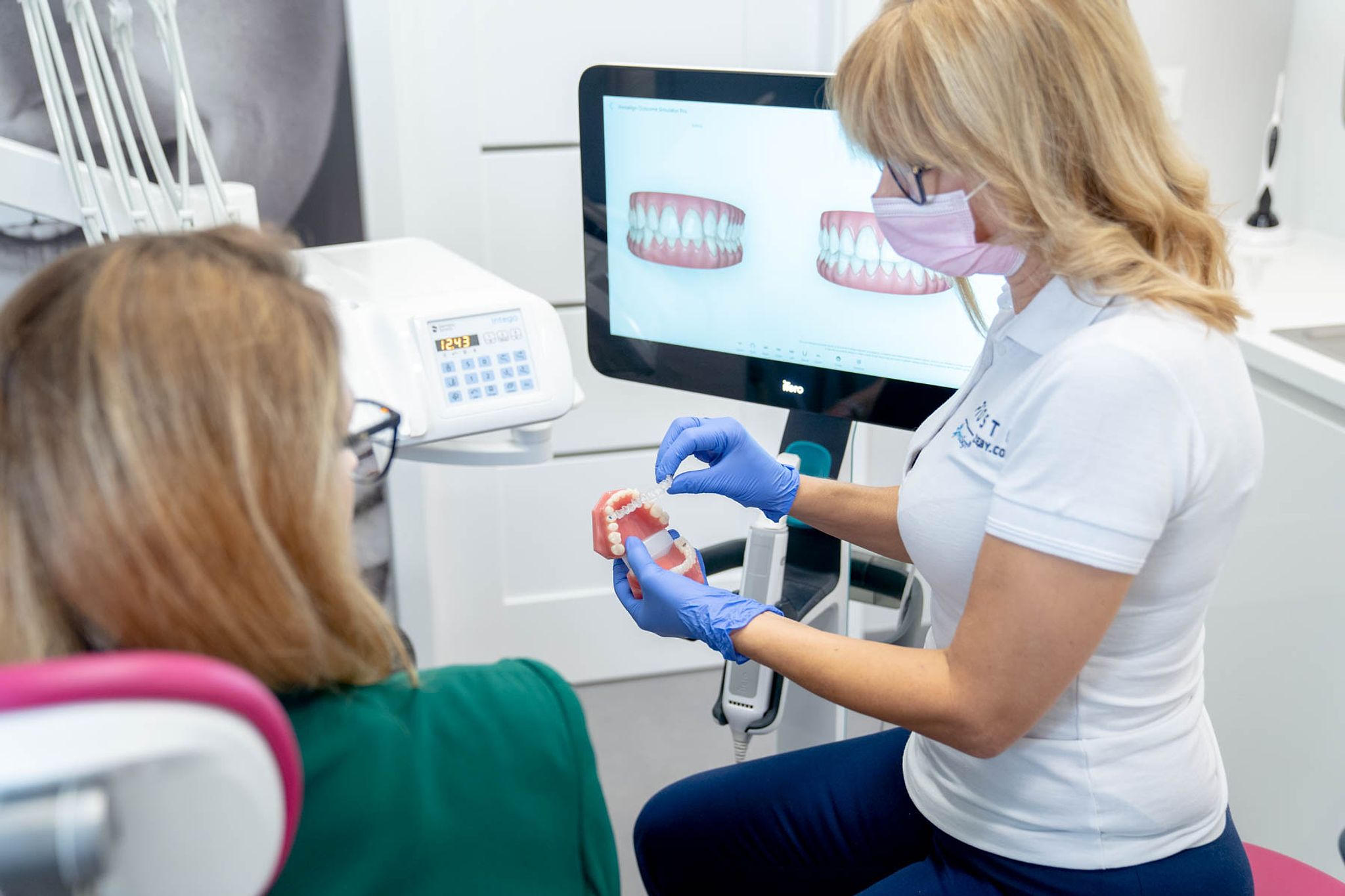
Step 1 – treatment plan
During your first visit to the Proste Zęby Clinic, a certified Invisalign® doctor will discuss your bite problems in detail, take a medical history, confirm whether your malocclusion can be corrected with Invisalign® and determine the results that can be achieved during treatment. Bite treatment with the Invisalign® method can be used in most patients, from simple to very complex malocclusions, in both teenagers and adults.
During the appointment the doctor will provide detailed information about the course and duration of treatment and its costs, and will answer any questions and doubts. Using 3D imaging technology, a teeth-straightening plan and visualisations are prepared – from the starting position to the final result that will be achieved at the end of treatment.
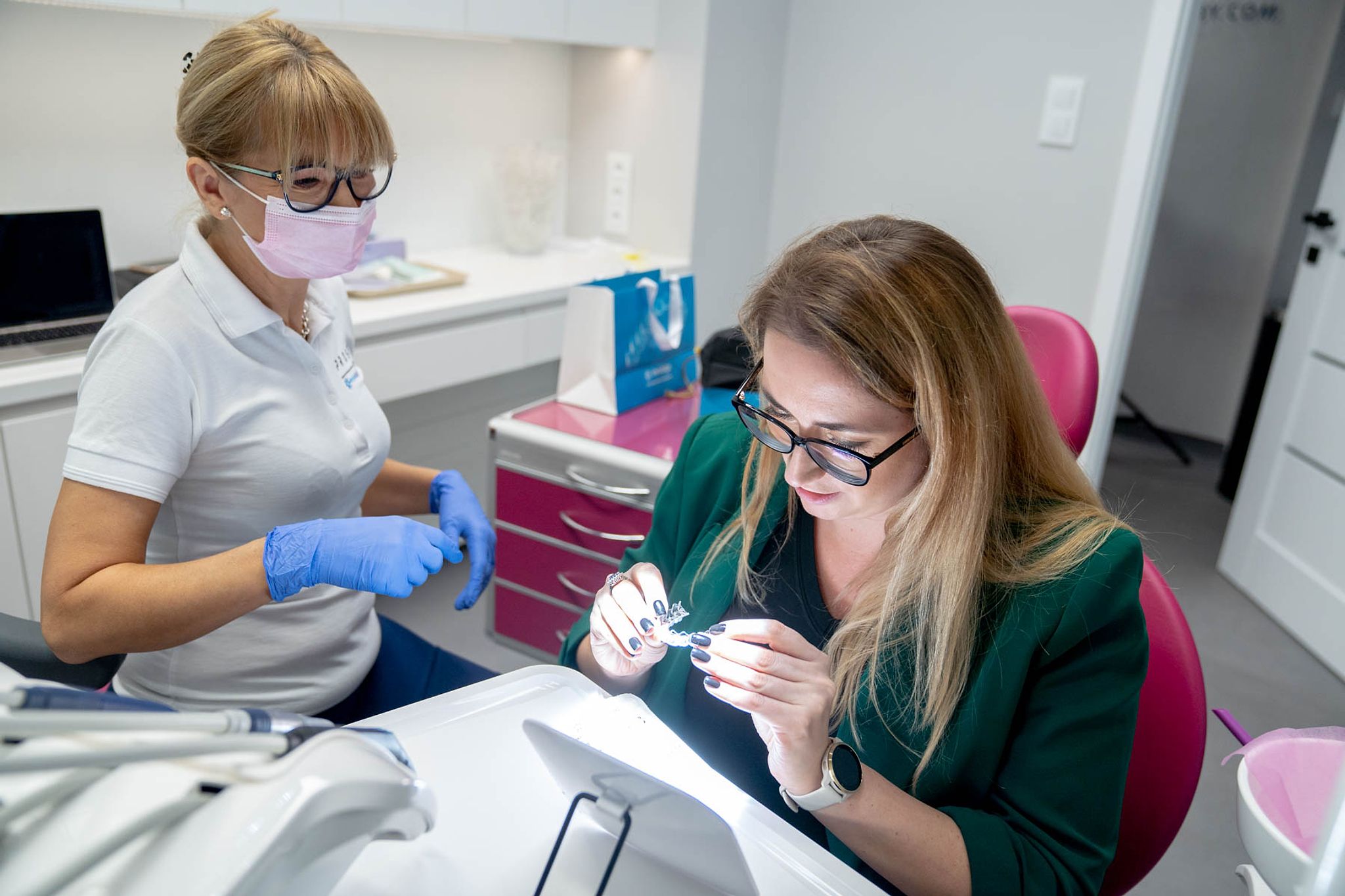
After reviewing the treatment plan and the visualisation of teeth straightening, the patient approves the proposed plan. Individual straightening aligners are then ordered for the entire treatment process. Depending on the complexity of the malocclusion and the adopted treatment plan, the number of aligners may differ for each patient.
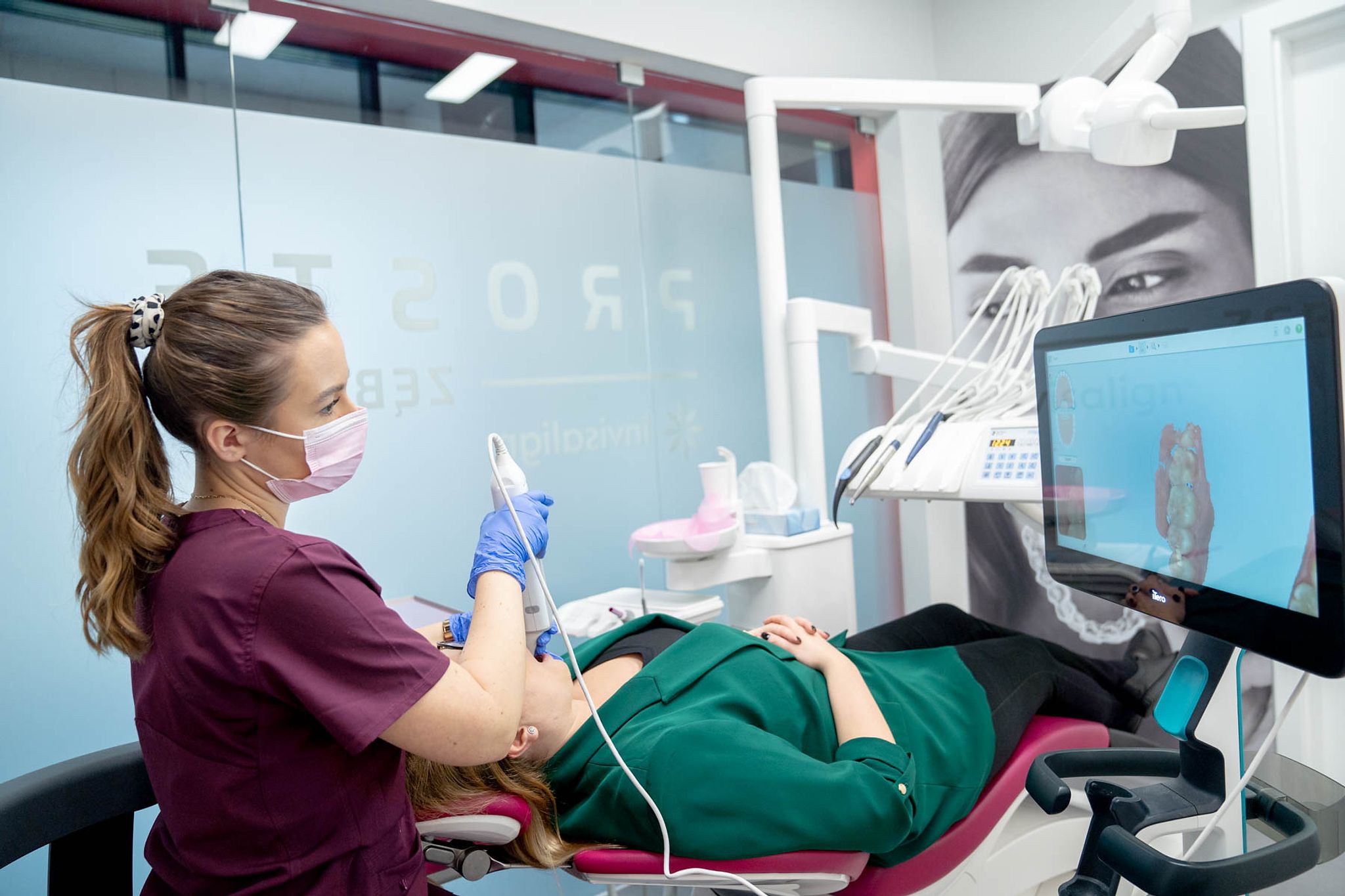
At our clinic we do not take traditional putty impressions or make traditional plaster models of the bite. A unique feature that sets our orthodontic practice apart is creating a virtual model of the patient’s teeth at the first visit, i.e. scanning the teeth with a modern iTero® scanner. Scanning involves taking a series of photographs of the teeth and building a 3D computer model of the bite on the monitor screen, which makes it possible to show the condition of the bite immediately and simulate its improvement straight away. The photographs and virtual impression are much more accurate than a traditional impression and plaster model, which allows the treatment to be planned more precisely. Scanning the teeth has no negative impact on the patient’s health (e.g. it does not emit X-rays).
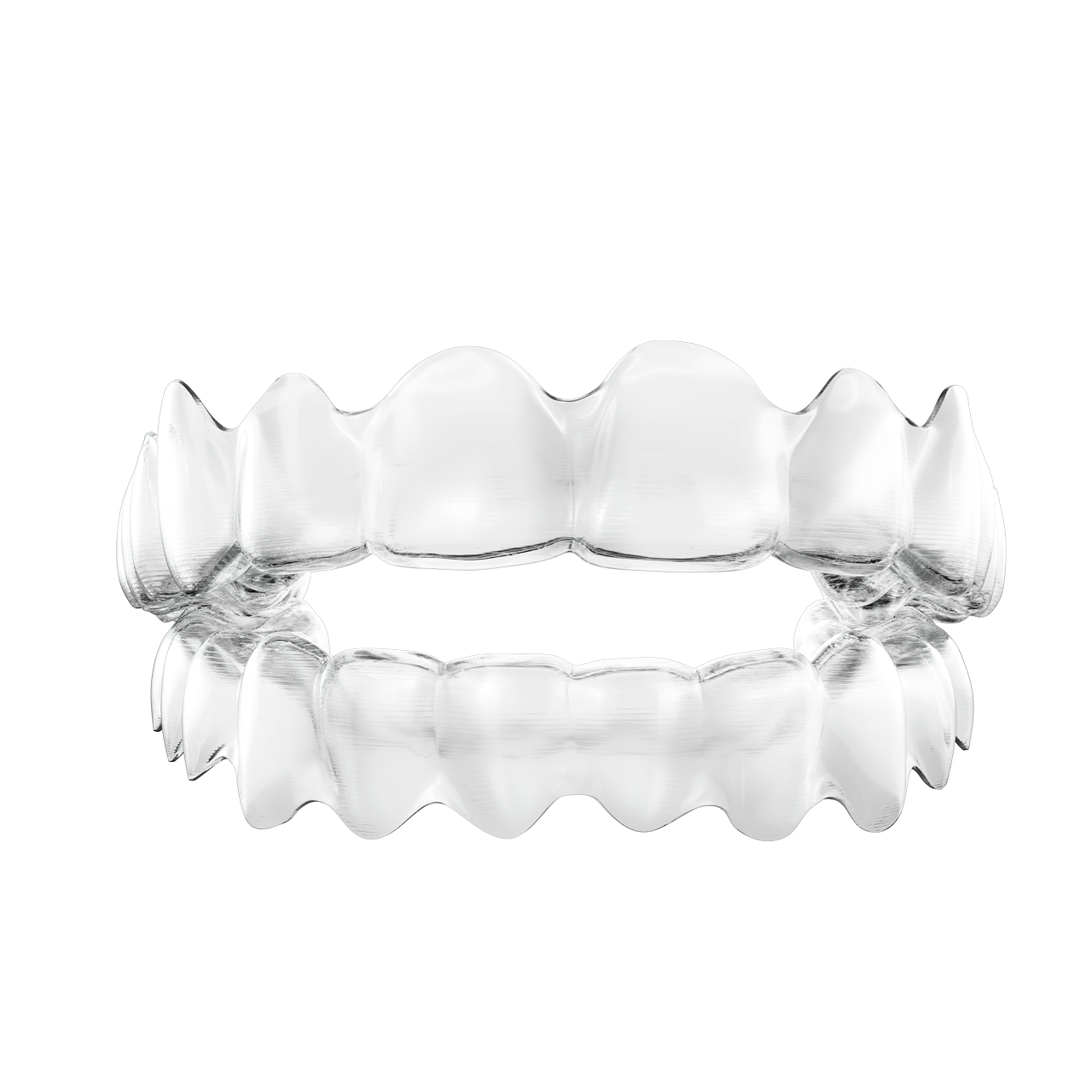
Step 2 – aligners
Based on the virtual 3D model and the agreed treatment plan, aligners individually fitted to the patient’s teeth will be prepared. Invisalign® aligners are made of thermoplastic, transparent material that does not irritate the cheeks or gums. New orthodontic aligners are put on according to the doctor’s instructions. The patient wears the aligners 20-22 hours a day, removing them e.g. while eating. They are replaced as agreed, every 7-10 days. Easy and comfortable to wear and put on, they can be removed without any problem for meals or oral hygiene. With every day of wear, the teeth gradually and gently move to their new positions. It is a sure way to a more beautiful smile.
Step 3 – check-up visits
The patient comes for check-up visits approximately every 6 – 8 weeks, according to the agreed schedule. Visits are shorter than with the traditional teeth-straightening method, as there is no need to replace brackets, wires or ligatures. During the visit, the doctor checks the progress of treatment by comparing it with the previously agreed 3D plan. The doctor also hands over the aligners for the next weeks of treatment.
Below we present ClinChecks of patients
of the Proste Zęby Clinic
“ClinCheck”, i.e. a computer treatment plan – a simulation of how the teeth move during orthodontic treatment.
A “ClinCheck” is prepared for every patient BEFORE treatment, for their approval during the first visits to the clinic.
On this virtual treatment plan, the patient can see exactly how their teeth straighten, what the individual stages of treatment will be, and how long and how many Invisalign® aligners they will need to wear.
Woman, 40 years old, multiple crowding, crossbite
Girl, 10 years old, extra lower front incisor removed
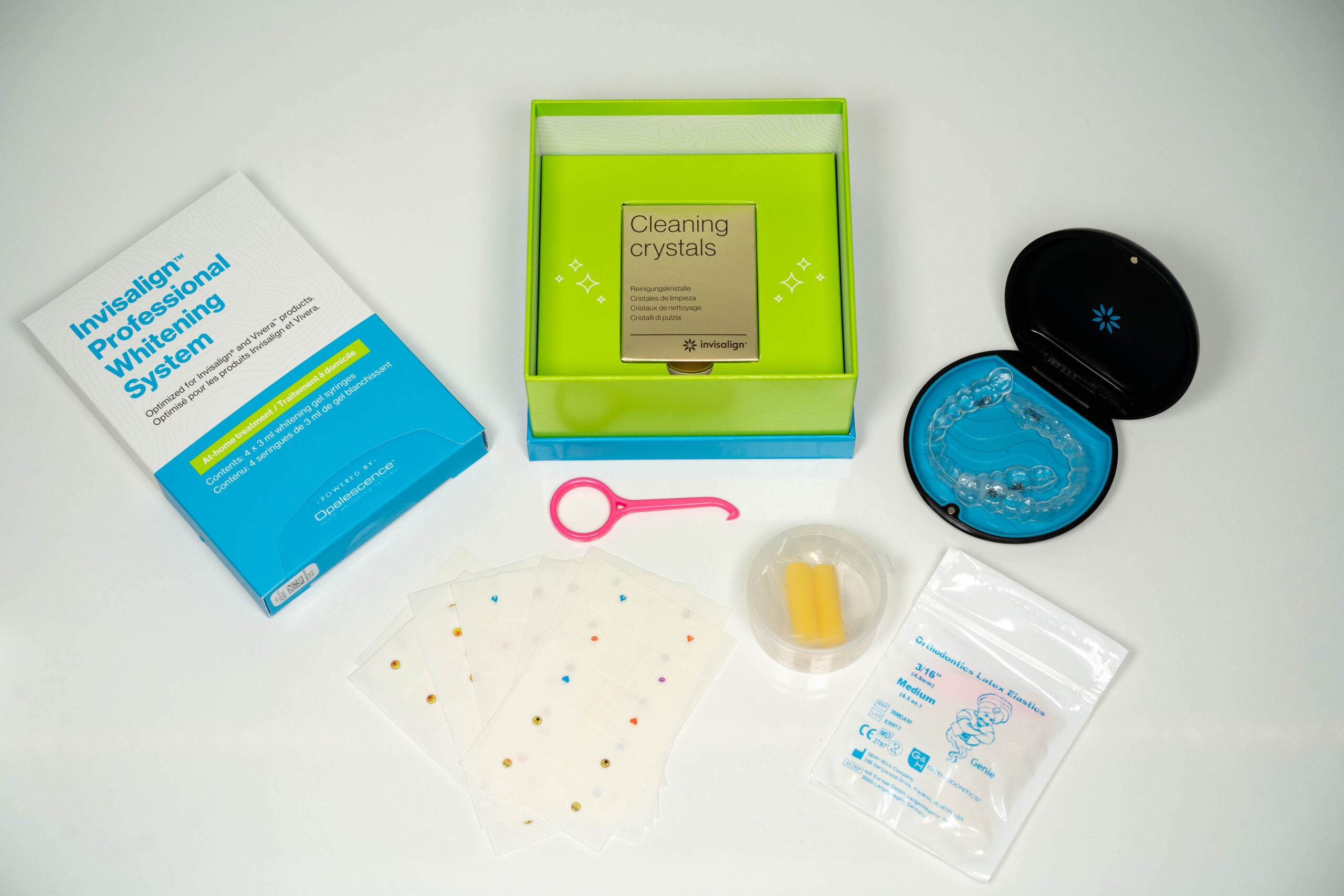
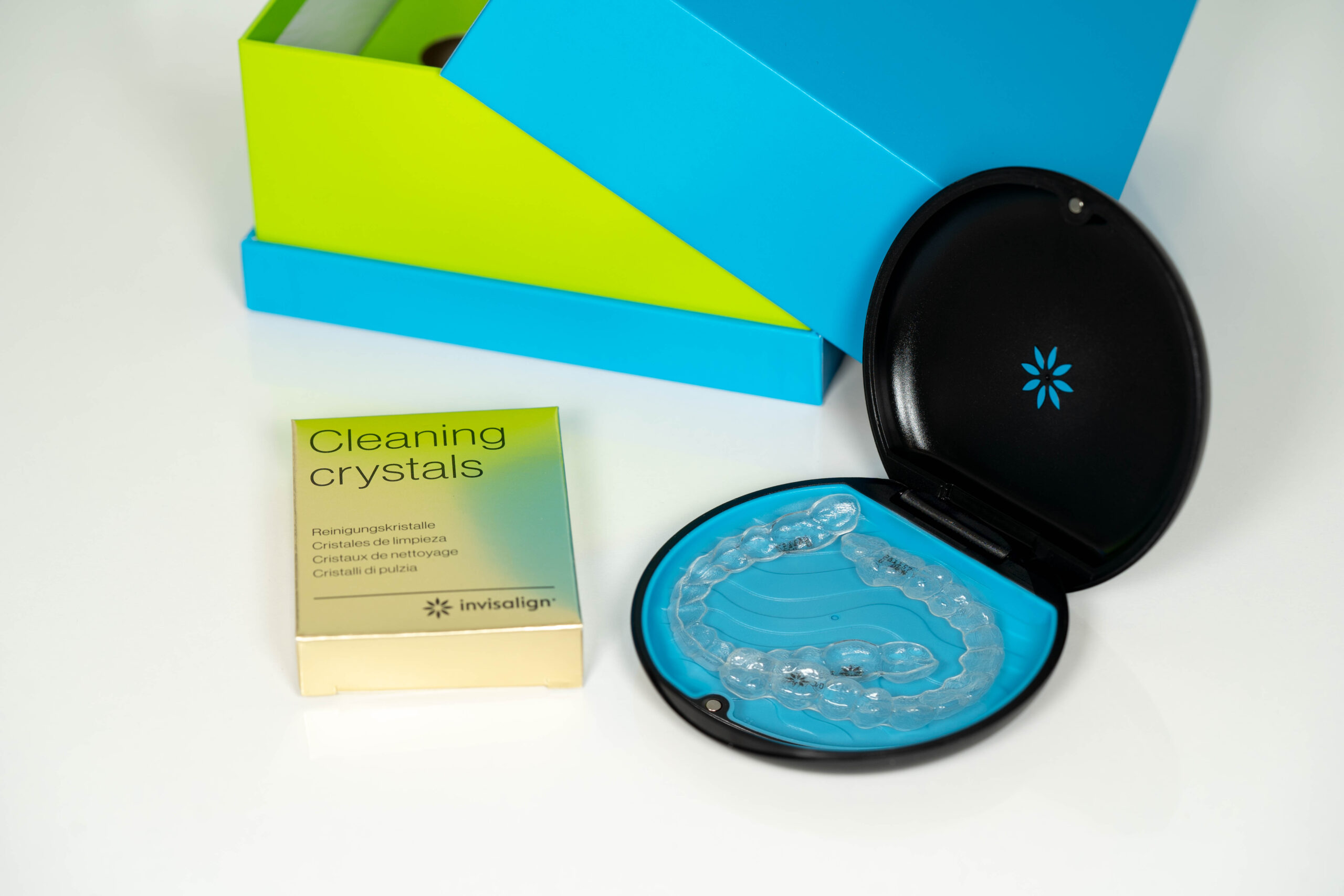
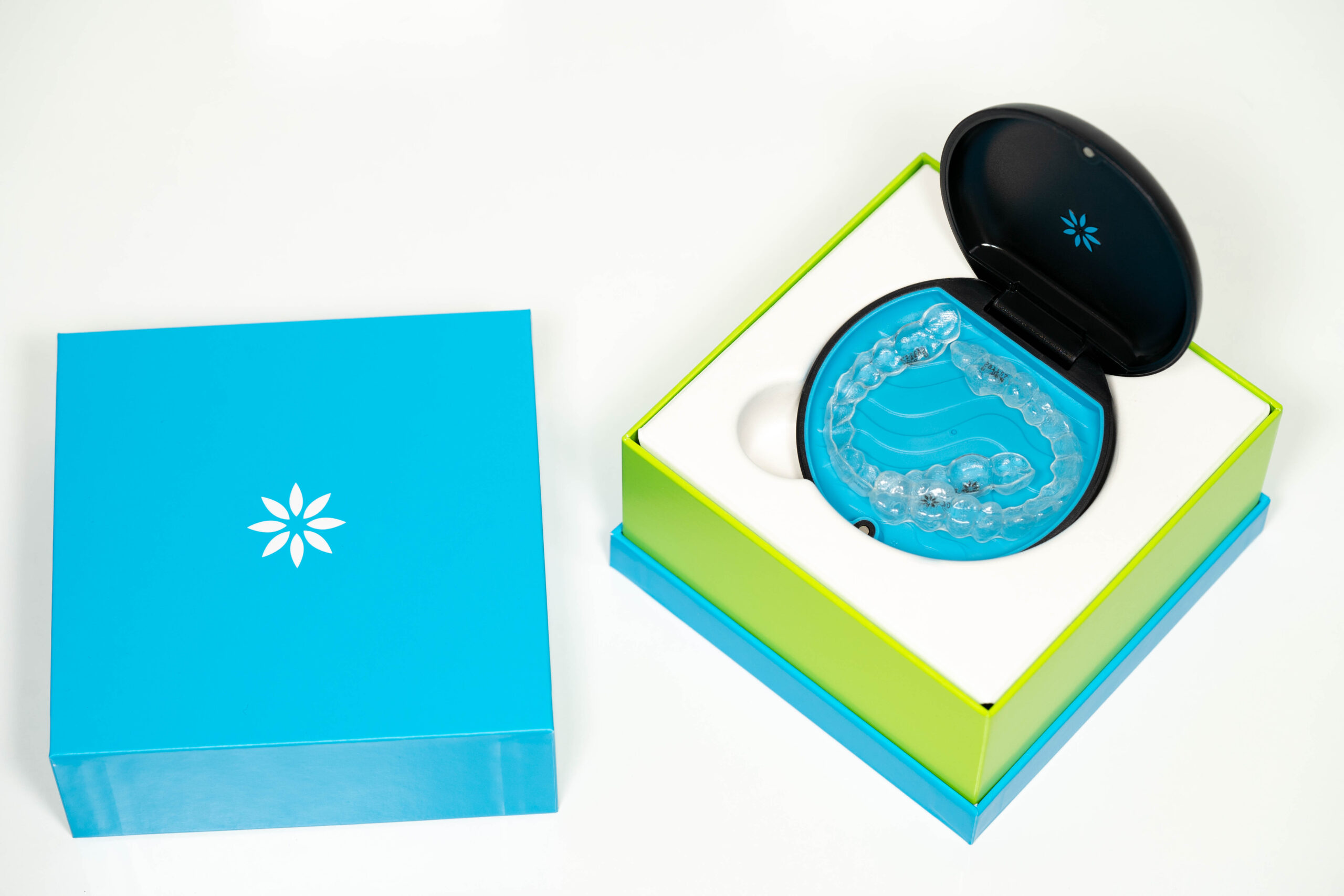
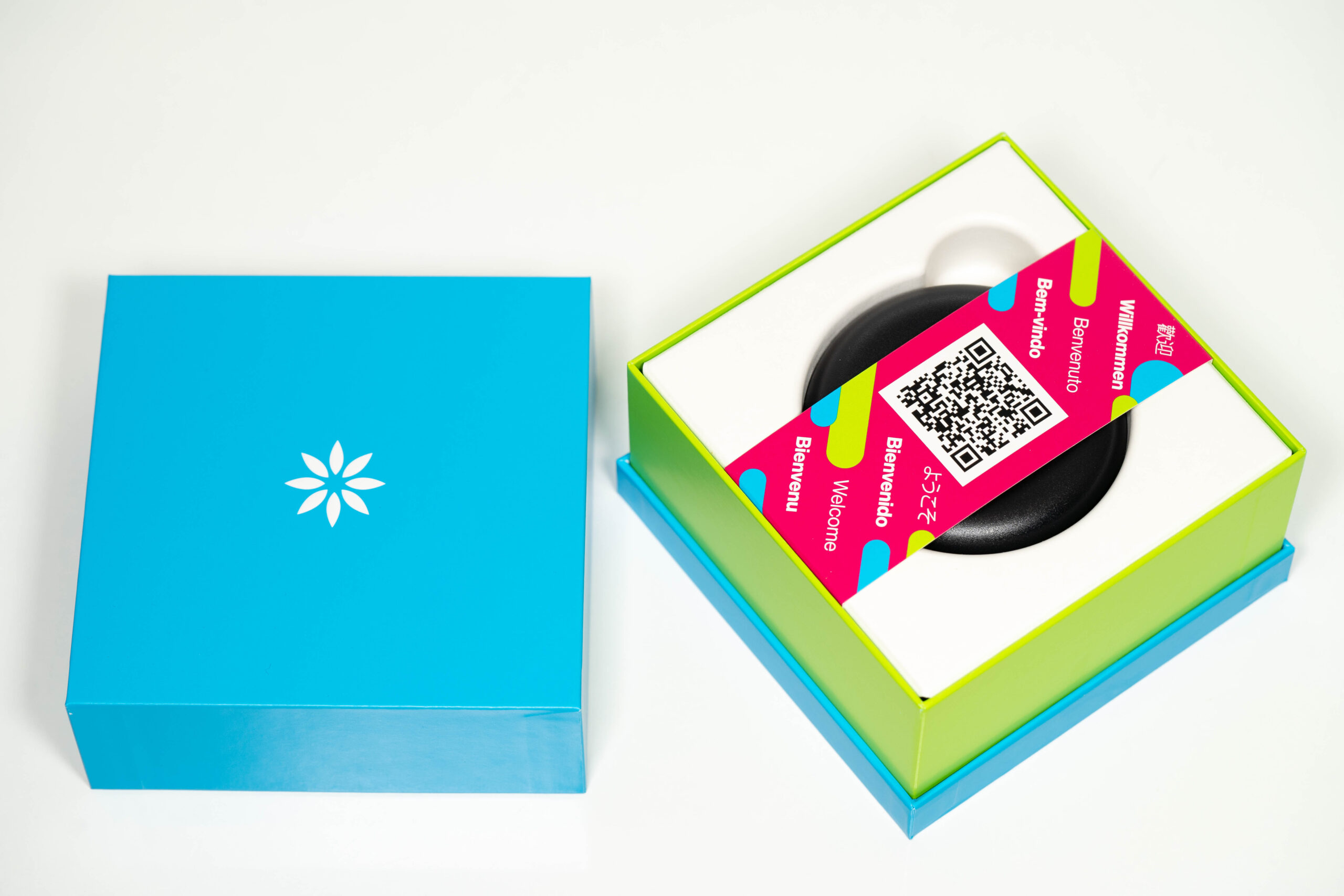
Invisalign® starter package
Treatment cost comparison
| Traditional treatment | Invisalign® treatment |
| consultations | |
| PLN 200 | included in the price |
| treatment plan | |
| PLN 500 | included in the price |
| upper braces* | |
| PLN 3500 | included in the price |
| lower braces* | |
| PLN 3500 | included in the price |
| number of visits | |
| 24 | 8 |
| check-up visits (PLN 250 each) | |
| PLN 4800 | included in the price |
| braces breakdowns** | |
| PLN 300-500 | included in the price*** |
| entire treatment | |
| PLN 15500 | from PLN 5900 to 18500 |
Arguments in favour of Invisalign®
| What advantage | How is it possible? |
| Treatment is shorter | |
| Invisalign® treatment up to half as long | Different tooth movements are possible at the same time, whereas in traditional treatment certain movements have to be performed one at a time. |
| Fewer visits | |
| every 2-3 months vs every month | By changing to the next aligner in the series every week, the patient in a sense activates the treatment themselves. With the traditional method, they have to go to the doctor so that the doctor can activate the braces for the next treatment period. |
| Better hygiene | |
| A series of removable aligners | The braces can be taken out for meals, and after eating you can clean your teeth and put the braces back in. |
| Better aesthetic effect | |
| Invisible braces | Invisalign® aligners are made of thermoplastic, transparent material that is practically invisible. |
| Treatment is painless | |
| Greater comfort for the patient | Lighter forces can be applied, because the change to the next aligner takes place week by week, so the force needed over the whole month to move the teeth can be spread into smaller forces each week. |
| Better treatment for diseased gums | |
| Smaller forces applied | Lighter forces can be applied, because the change to the next aligner takes place week by week, so the force needed over the whole month can be spread into smaller forces each week. Precise planning of tooth movement to within 0.1 mm makes it possible to monitor the condition of the periodontium. Using small forces is also better for the periodontium than traditional orthodontic methods. |
| Staying active | |
| A series of aligners that fit tightly to the teeth | You can play even high-impact sports – there is no risk of a bracket coming off or a cheek being injured by a wire, etc. |
| Long trips possible | |
| An individually designed and manufactured series of aligners for each patient | The patient can receive a series of individually fitted aligners for the period until the next visit is possible – i.e. if they are going away for e.g. 4 months, they can continue active treatment themselves by putting on the next aligner every week, without needing a doctor’s visit. |